

When the first cold front hits Houston, you want to gather around the fireplace. But you turn it on and nothing happens. Maybe it lights up but gives off a strange smell, or the pilot light just won’t stay on.
After months of sitting unused through heat and humidity, a gas fireplace can collect dust and debris around the burner and corrosion on metal components. Birds, insects, and other animals can build nests, blocking vents and pushing exhaust back indoors.
Before your first use of a gas fireplace for the season, have a qualified technician perform a gas fireplace tune-up before first use. The visit should cover the burners, pilot and ignition system, gas pressure, venting, and carbon monoxide safety. Fuel-burning heating systems, fireplaces, flues, and vents should get annual inspections.
Booking gas fireplace service before the weather turns colder gives you time to find and fix a problem before that first fire of the season and the cold-weather rush.
Why a Gas Fireplace Needs a Tune-Up Before First Use
What an idle Houston summer does to a sealed gas appliance
A fireplace can go eight months or more without being used in Houston. That gives dust and lint plenty of time to collect around burner ports and pilot assemblies.
Humidity creates another issue. Moist Gulf Coast air can speed up corrosion on metal components and connections, while worn or poorly adjusted equipment can contribute to carbon monoxide problems. Blocked, disconnected, or leaking flues are among the possible CO sources, as is back-drafting from a fireplace.
Dust on gas fireplace burner components may be only one part of what has happened while the unit sat idle.
Vent and flue blockages form during the off-season
The fireplace may not be running in spring and summer, but the vent is still exposed to the outdoors. Birds, insects, and animals can build nests that create gas fireplace vent blockage problems. If exhaust can’t move freely out of the house, it may be pushed back inside. Warm-weather nesting is a known cause of blocked vents.
Why this matters more than it looks
Carbon monoxide can be hard to recognize. It has no color or odor, and exposure can cause flu-like symptoms, including headache, dizziness, nausea, and confusion.
For a full breakdown of what routine maintenance involves, see these annual service expectations.
What a Professional Pre-Season Gas Fireplace Tune-Up Covers
A pre-season gas fireplace inspection focuses on the parts of the system that affect safe ignition, combustion, venting, and safe operation. Professional gas fireplace service should include each of the following checks.
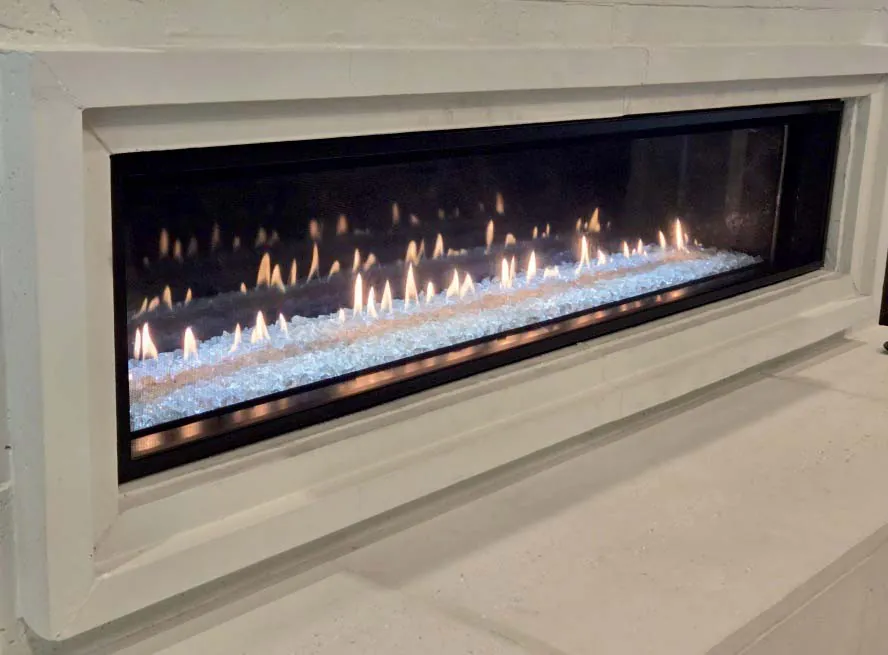
Combustion and gas performance
A technician checks:
- Fuel input rate, gas pressure, and operating temperatures
- The unit for gas leaks
- Ventilation and combustion air
- Whether the appliance is properly adjusted
Gas appliances need the right fuel-to-air balance to operate properly.
Burner, pilot, and ignition
The technician will:
- Clean dust and debris from the burner ports
- Test the pilot and ignition system
- Make sure the unit lights reliably and continues operating
- Compare the flame to the manufacturer’s specifications
Many gas log sets are designed to produce yellow flames, so color by itself doesn’t tell you whether something is wrong. Soot, lifting or sputtering flames, or flames touching the glass or logs are more useful warning signs.
If your gas fireplace pilot light won’t stay lit or the gas fireplace won’t ignite, a technician can identify the cause instead of treating the symptom.
Venting, flue, and combustion air
A technician checks the venting system for:
- Debris or other blockage
- Leaks
- Loose sections
- Disconnected sections
- Adequate fresh air for combustion
Never block ventilation openings. Keep fireplace flues open while the unit is operating.
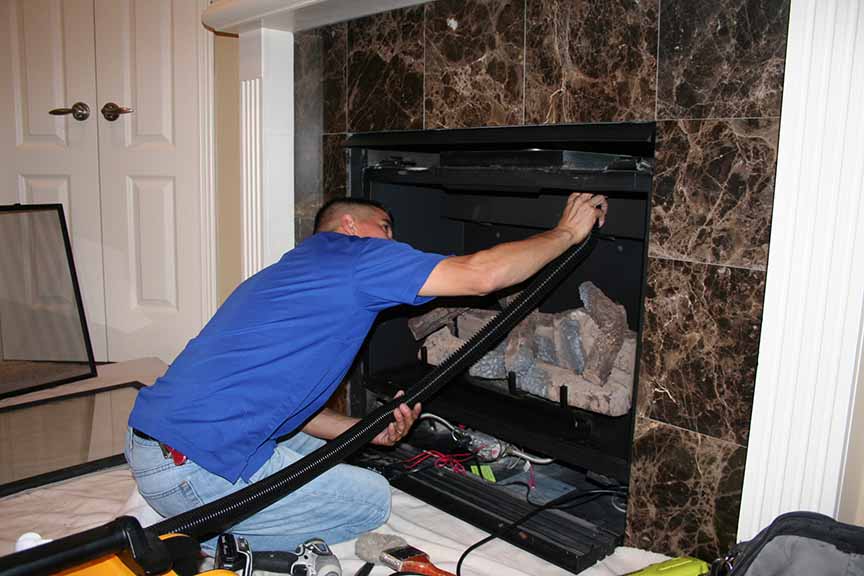
Glass, gaskets, and media
A qualified technician will make sure the glass panel and gasket seals don’t have any cracks or gaps. To help the fireplace function properly, the technician will arrange the logs, embers, and glass media as the manufacturer specifies.
CO alarm verification before the first fire
The fireplace isn’t the only thing to check before the season starts. Make sure you have carbon monoxide alarms in the hallway near bedrooms in each sleeping area and test the batteries when the clocks change. Replace alarms according to the manufacturer’s instructions or every five years.
Homeowners can handle the alarm check. A qualified technician should handle internal servicing of a fuel-burning appliance.
Warning Signs at First Light and Why October Beats December
Stop and call a pro if you notice these on the first fire
Pay attention to what happens the first time you turn on the fireplace. Stop using it and call for service if you notice:
Sometimes a gas fireplace smells when first turned on because dust is burning off the burner and logs after months of non-use. Don’t confuse that odor with a persistent sulfur or exhaust smell, which needs professional attention.
If anyone develops possible carbon monoxide symptoms while the fireplace is running, leave the area and get fresh air.
Why the October window is the smart booking window
October is an in-between period in Houston. Summer is winding down, but many homeowners still aren’t thinking about their fireplace. That changes quickly.
Houston temperatures follow a seasonal shift. Average lows drop from 60.9°F in October to 51.5°F in November and 45.6°F in December, based on Houston climate normals. And don’t forget about the occasional freeze here and there.
By the time a cold front has you reaching for the switch, fireplace-service season is already underway.
That’s the practical reason to schedule fireplace service in October. If the technician finds a problem, there’s more time to diagnose it, get parts, and schedule the work.
You can also use the winter prep guide to get the rest of the fireplace area ready before colder weather arrives.
FAQs
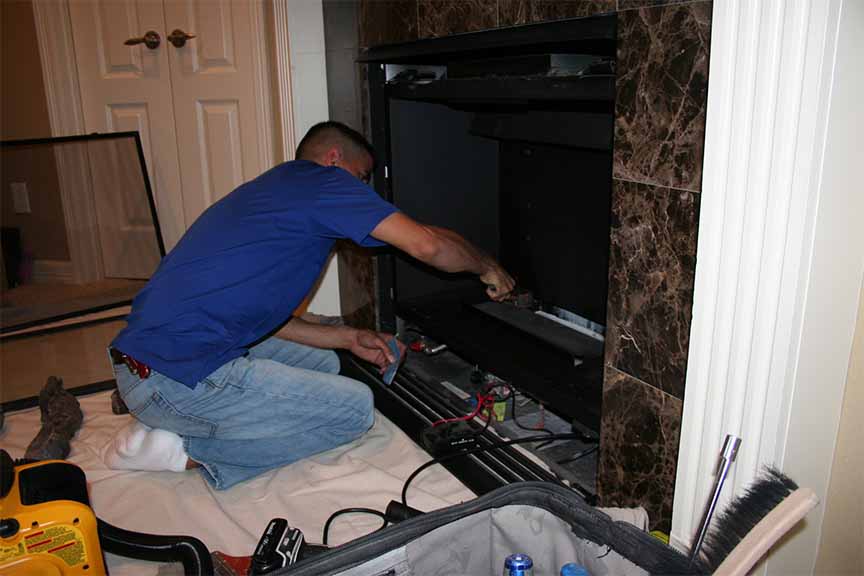
A tune-up before the season’s first fire is a safety check. Test your carbon monoxide alarms and have the fireplace professionally inspected before you start using it for the first time this season.
Perfection Supply has served the Houston metro since 1979 with NFI-certified technicians. If an older fireplace is reaching the point where replacement makes more sense, you can also explore available fireplace options.
Don’t wait until the first cold night to find out your fireplace needs attention. Start with gas fireplace service and schedule a pre-season tune-up before you plan to use it.
References
Centers for Disease Control and Prevention. “Carbon Monoxide Poisoning Basics.” Centers for Disease Control and Prevention, 12 Jan. 2026, www.cdc.gov/carbon-monoxide/about/index.html.
National Weather Service. “Houston IAH Extremes, Normals, and Annual Summaries.” NOAA National Weather Service Houston/Galveston, TX, www.weather.gov/hgx/climate_iah_normals_summary.
United States Consumer Product Safety Commission. “Home Heating Equipment.” CPSC.gov, www.cpsc.gov/Safety-Education/Safety-Education-Centers/Carbon-Monoxide-Information-Center/Home-Heating-Equipment.
United States Consumer Product Safety Commission. “Install a Carbon Monoxide Alarm in Your Home: CPSC Urges Annual Furnace Inspection to Prevent CO Deaths.” CPSC.gov, 19 Oct. 2004, www.cpsc.gov/Newsroom/News-Releases/2005/Install-a-carbon-monoxide-alarm-in-your-homeCPSC-Urges-Annual-Furnace-Inspection-to-Prevent-CO-Deaths.
United States Environmental Protection Agency. “Carbon Monoxide’s Impact on Indoor Air Quality.” EPA.gov, 15 July 2026, www.epa.gov/indoor-air-quality-iaq/carbon-monoxides-impact-indoor-air-quality.
United States Fire Administration. “Heating Fires in Residential Buildings (2017–2019).” Topical Fire Report Series, vol. 21, no. 10, Dec. 2021, www.usfa.fema.gov/downloads/pdf/statistics/v21i10.pdf.