

Most Houston homeowners think of their fireplace and insulation as two separate things. One is about comfort and style, while the other helps lower energy costs. Yet the area around the fireplace enclosure, where it meets the surrounding exterior walls, attic, and roofline, is one of the most common places for air to leak in and out of a home.
In our city, persistent heat and humidity force home AC systems to work much harder than they do in drier climates. A gas fireplace installed without proper insulation and air sealing around the fireplace framing creates a direct path for heat and humidity to enter your home. This results in higher utility bills and energy waste.
Your fireplace and insulation work as a team. ENERGY STAR estimates homeowners can save an average of 15% on heating and cooling costs by sealing air leaks and adding recommended insulation. New home fireplace energy efficiency starts at framing. This is your one real chance to get the fireplace enclosure insulation and air sealing right, before drywall installation closes everything up.
Are you building a new home in Houston? Ask your builder how the fireplace enclosure will be insulated and air-sealed, or talk to a contractor who handles both.
How a Fireplace Enclosure Becomes an Energy Leak
A fireplace enclosure is the framed area surrounding the fireplace from the firebox to the ceiling within the conditioned space. This area around the fireplace enclosure, which includes all possible points of air infiltration, is a key air-leakage point that should be sealed with an expanding foam sealant. It’s important to install air barriers at the ceiling. This will block air infiltration between the living space and the attic. When installing attic insulation above the fireplace enclosure, it is important to maintain all manufacturer’s specifications regarding the flue pipe.
This matters even more here in Houston. In our cooling-dominated climate, an unsealed fireplace enclosure is a direct path for hot attic air, even when the fireplace sits unused. Houston attic temperatures regularly climb past 140°F in the summer. With an unsealed fireplace enclosure area, that heat radiates straight into your living space. As you can see, there is much to consider when building a home with a gas or wood-burning fireplace.
What Proper Fireplace Insulation Looks Like in New Construction
The ENERGY STAR Thermal Enclosure System Checklist calls for insulation to be installed without gaps, compressions, or voids in the exterior wall cavities behind every fireplace. It should be backed by a rigid air barrier that meets the manufacturer’s clearance to combustibles, to create a continuous thermal barrier. Insulation and air sealing work together to reduce heat flow through the building envelope. Builders should account for these gas fireplace insulation requirements early in the planning process.
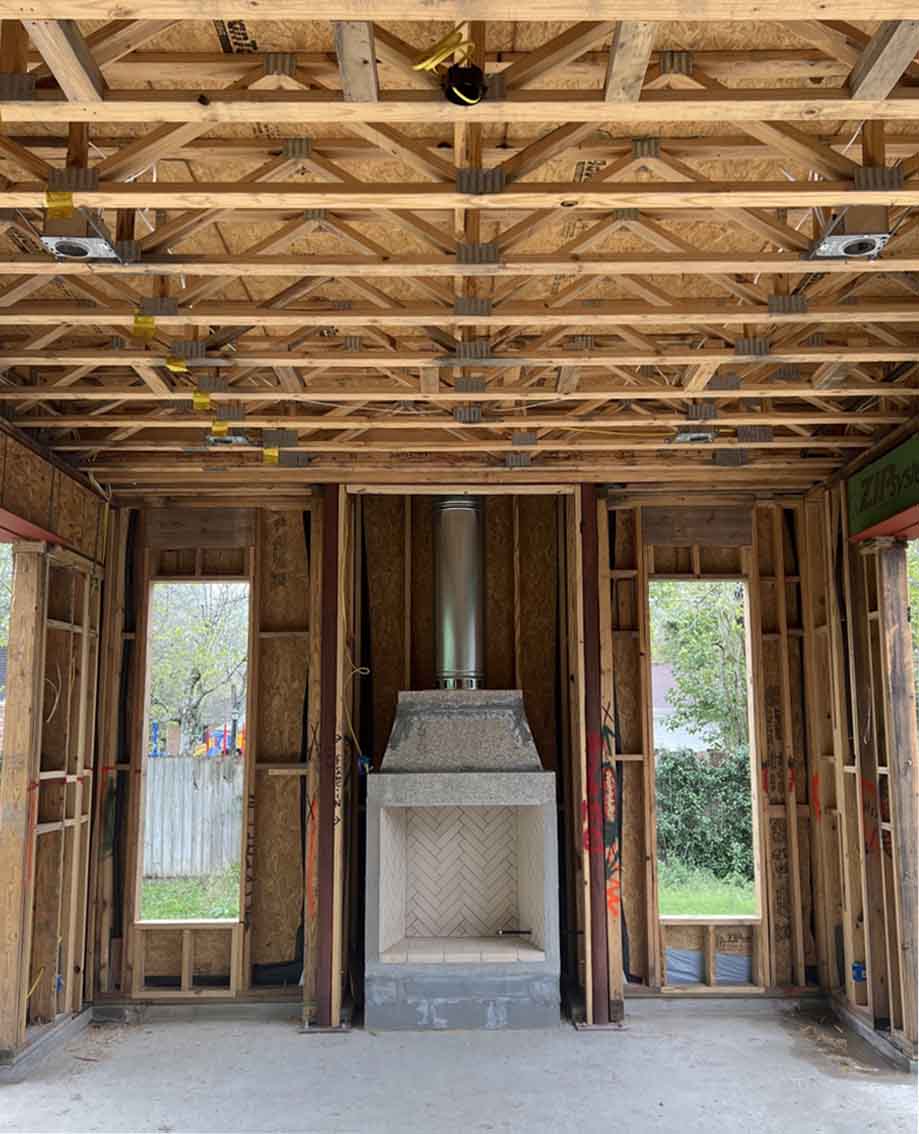
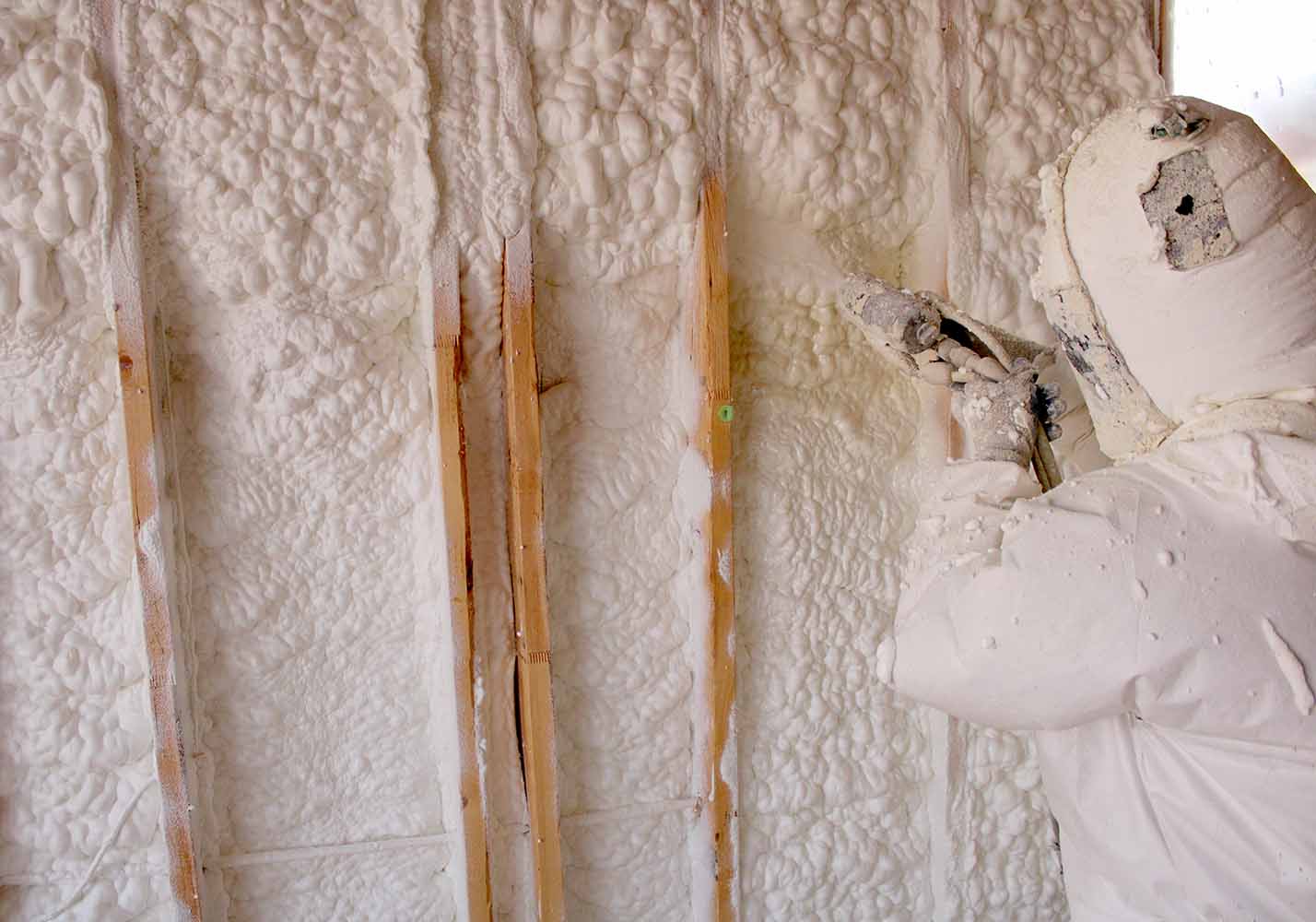
Spray foam insulation is an ideal material for the job. The framing stage is the only practical window to apply spray foam around the fireplace enclosure, install fire-rated blocking at the attic floor line, and ensure continuous insulation coverage throughout. Once drywall goes up, access becomes extremely limited.
When a home is foam sealed or insulated with fiberglass batts or blown-in insulation, the fireplace installer needs to add an insulation shield around the flue pipe. This allows the insulation to be installed directly up to the shield without touching the flue pipe.
Applying spray foam insulation around the fireplace enclosure provides both insulation and air sealing in one application. This creates an airtight seal that prevents both heat transfer and air movement. Installing fiberglass batts in the surrounding wall cavities adds thermal resistance, and rigid air-barrier materials are required at the attic penetration by code.
Why One Contractor for Both Makes the Difference
In most new-construction Houston homes, the fireplace installer and insulation crew work as separate trades on separate schedules. The fireplace team handles the firebox and venting while the insulation crew handles the walls and attic. The fireplace enclosure can easily fall through the cracks. Homeowners can save on their heating and cooling costs when air sealing and insulation are handled comprehensively, not piecemeal.
Choosing to combine fireplace and insulation services under one contractor makes a real difference. When one company installs both, the fireplace enclosure gets sealed as part of the natural workflow instead of an afterthought. The crew knows exactly where the fireplace sits and where blocking belongs, because they work together daily.
This kind of coordination is important to ensure Houston area homes receive proper fireplace installation, air sealing, and insulation of the fireplace enclosure. This will help deliver a more energy-efficient Houston area home.
Frequently Asked Questions
Get It Right the First Time
Your fireplace and insulation share walls, attic penetrations, and air pathways that must be sealed together to perform correctly. In Houston’s cooling-dominated climate, an unsealed fireplace enclosure drives up cooling costs, introduces humidity, and forces your HVAC to work harder most of the year. During framing is your one shot to get it right before the drywall goes up and the walls close for good.
Perfection Supply has served Houston builders and homeowners with trusted, knowledgeable guidance since 1979. We install your fireplace and insulation together, so your fireplace enclosure is sealed, your envelope is tight, and your new home performs the way it should from day one. Call (713) 937-4575 or contact us today to get started.
References:
ENERGY STAR. “Methodology for Estimated Energy Savings from Sealing and Insulating.” U.S. Environmental Protection Agency, www.energystar.gov/saveathome/seal_insulate/methodology.
ENERGY STAR. “Recommended Home Insulation R–Values.” U.S. Environmental Protection Agency, www.energystar.gov/saveathome/seal_insulate/identify-problems-you-want-fix/diy-checks-inspections/insulation-r-values.
ENERGY STAR. “Thermal Enclosure System Rater Checklist Guidebook.” U.S. Environmental Protection Agency, https://www.energystar.gov/ia/partners/bldrs_lenders_raters/downloads/Thermal_Enclosure_System_Rater_Checklist_Guidebook_Rev04_v5_FINAL_508.pdf?2b0c-6bce.
U.S. Department of Energy. “Building America Climate-Specific Guidance.” Building America, https://www.energy.gov/cmei/buildings/building-america-climate-specific-guidance.
U.S. Department of Energy. “Draftstopping & Fireblocking Air Sealing Flue Pipes.” Building Science Education Center, https://bsesc.energy.gov/energy-basics/draftstopping-fireblocking-air-sealing-flue-pipes.
U.S. Department of Energy. “Energy-Efficient Home Improvement Credit: Insulation and Air-Sealing Essentials.” Office of Clean Energy Demonstrations, www.energy.gov/cmei/buildings/articles/energy-efficient-home-improvement-credit-insulation-and-air-sealing.